
FOR A NEW PARTY OF AND FOR WORKERS
By Ian Spark
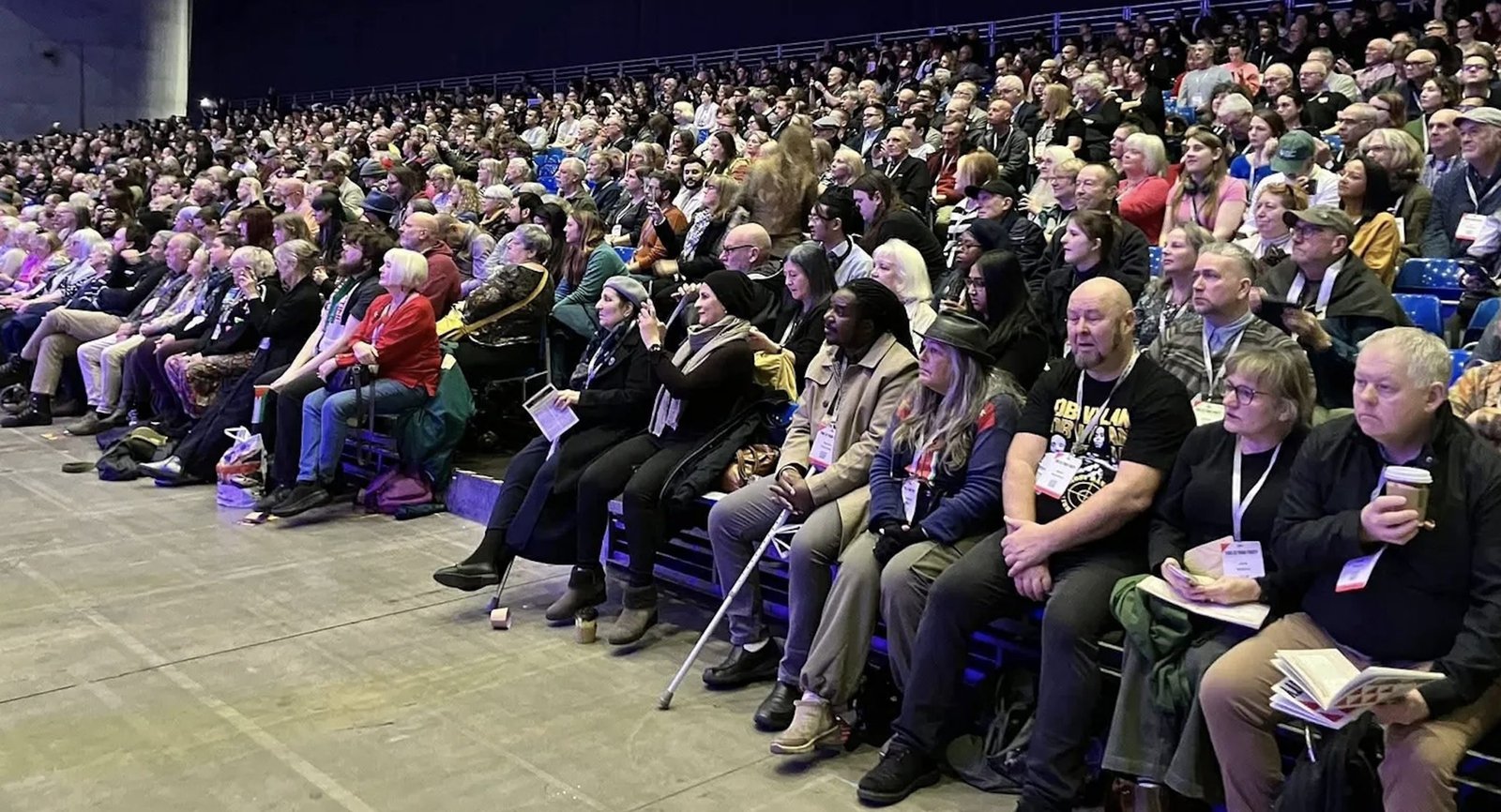
On 29 and 30 November 2,500 were chosen by sortition to found a new party of struggle against capitalism, some pushing for an overtly socialist party. After the conference it is reported that membership rose to 66,000. However, those chosen found before the conference started that the main leadership around Jeremy Corbyn had acted outside party democracy by a bureaucratic expulsion of SWP and Counterfire members, including a National Committee representative. Later during conference a majority voted for dual party membership, though each case will still be filtered through the Central Executive Committee—a reminder of who truly holds the reins.
Conference also later voted, by a narrow majority, for ‘collective leadership’ via the Central Executive Committee (CEC) rather than a single leader, a role that would almost certainly have gone to Jeremy Corbyn. Zarah Sultana hailed this as “maximum member democracy,” yet much more is required before Your Party can be a real instrument for and of working-class power – the central reason for building a party that is clearly attracting many people wanting to fight for socialism.
The executive will have 20 seats four for elected public officer holders and 16 for ordinary members, then the CEC will elect a small officers’ groups which must all be ordinary members. MPs may hold public-office roles but are barred from the top two positions. The bitter pre-conference factionalism — Corbyn’s team reporting Sultana to the Information Commissioner, Sultana threatening legal action — spilled into the conference and will continue. The party now has a name, constitution, political statement, standing orders, and a Year 1 strategy, but several motions fortifying bureaucratic power passed with ease. These will inevitably clash with the membership’s democratic instincts and the need to build vibrant, militant branches based in working-class life.
Sultana represents the left edge of the bureaucracy, operating outside Corbyn’s central machine. Months of turmoil have dampened the initial surge of enthusiasm: though 800,000 expressed interest, 66,000 are paying pay dues and just over 22,000 registered to vote. Leadership amendments were given priority over members’ proposals—justified through vague, unverified claims of “regional mandate.”
One member’s motion demanding MPs take only an average worker’s wage briefly gathered momentum before being abruptly removed under the flimsy excuse of a typo—though other motions with errors remained untouched. This was transparent manipulation.
Many groups talk about “uniting the left,” but unity without a clear working-class programme and action will be limited. The central question is how the party can become a vehicle for genuine working-class power rather than a refuge for left-leaning parliamentarians. At present, there is no programme—only a vague Political Statement. It promises to “change the balance of power,” a phrase that leaves capitalist class rule in place. This is the old reformist dead end. There will be no programme debate until 2026, conveniently postponing any real strategic clarity.
Your Party Democratic Rights
Amendments denied debate or a vote included proposals to:
• strip the CEC of its power to ban membership of “conflicting” organisations.
• protect concessionary membership rates.
• establish a genuine disciplinary and grievance structure.
• let members elect the chair, deputy chair, and CEC officers.
• require monthly CEC meetings with public agendas and minutes.
• revise recall petition thresholds.
• define local party powers.
• abolish CEC seats reserved for public office holders.
Other vital proposals—allocating half of membership dues to branches, placing staff on a worker’s wage, capping large donations—were not even allowed onto the agenda. The leadership clearly fears a financially independent, democratically empowered membership.
Amendments undermining member democracy included:
• Reducing local policy to online votes sidelining in-person debate.
• Sortition for future delegates, further weakening branch democracy.
• Allowing individual online motions despite the system’s failure this year.
• Allowing all members to vote on conference issues online, hollowing out delegate structure entirely.
• Creating a trade union commission dominated by senior officials who will likely smother grassroots workplace organising.
The leadership could have allowed all amendments clearing a basic threshold to be presented and voted on. It chose not to—because genuine democracy threatens its grip.
Grassroots Achievements
Despite obstruction, the grassroots secured:
• Collective leadership rather than a single figurehead.
• An explicit declaration that the party is rooted in the working class.
• Autonomy for local branches to control their own spending.
• A 20% local membership requirement to form branches.
• Three anti-oppression, pro-trans amendments in Year 1 strategy.
• The right for branches to remove officers by simple majority.
• Term limits on regional and national officers and public-office holders.
• Commitment to supporting anti-austerity candidates in the 2026 local elections.
Meanwhile, grassroots meetings with many young people held outside the conference fostered vital networks that will be essential for the coming struggle to democratise the party and to turn it to the questions of the mass working class movement.
The Future
Local branches will begin forming in the coming weeks, alongside preparation for the 2026 local elections and CEC elections concluding by February. The battle lines are already drawn, with organised grassroots groups assembling a united slate to challenge the leadership’s stranglehold.
In the long term, the future of Your Party hinges on whether the working-class membership can wrest control from a leadership that talks democracy while suffocating it. Your Party must root itself in working-class communities and workplaces—not in the parliamentary corridors or amongst the union bureaucracies where reformism will hold sway.
Above all, the party needs a real programme: one that confronts capitalist power head-on, builds working class struggle, fights for class independence, for class power in the workplace, communities and for all oppressed people. We have to support national liberation struggles. Anything less will leave Your Party as just another vehicle for left-wing parliamentarians, not a weapon in the hands of the working class.