
The Weight Behind the Smile: A Female Security Guard Speaks Out

Bruised Flower (London)
It is still dark when my alarm rings. I put on my uniform, step into the cold morning and switch into security mode. My job is to protect students, staff and buildings. When a crisis erupts, security officers move towards the problem while everyone else moves away.
People see the uniform and the smile — someone calm, professional and in control. They do not see what that person has carried into work, or the invisible pressures women can face coming in before the shift has even begun and being a woman of colour adds more. In security, there is little room for exhaustion or weakness. You stand tall, stay composed and carry on.
Sometimes, that composure is tested within minutes — by aggressive trespassers or staff who object to basic security checks. We are trusted to protect the university, yet can be treated as though we are beneath the very people we are there to protect. Whatever you are carrying that morning, you put it aside. You take a breath, keep your voice steady and do your job.
But there is a weight behind that smile that few people see.
We are trusted with the safety of the university, yet our own security can feel uncertain. This is the contradiction at the heart of outsourcing. Universities speak proudly about equality and inclusion, yet many of the people keeping them safe and clean are employed through third-party contractors, often on worse terms. We work side by side, protect the same buildings and serve the same community, yet can have different pay, sick leave and job security.
The work is essential. The people doing it should be treated as essential too.
Outsourcing creates distance. When workers raise concerns, responsibility can pass between the university and the contractor. One points to the other, while somewhere in the middle is the worker, still waiting for an answer.
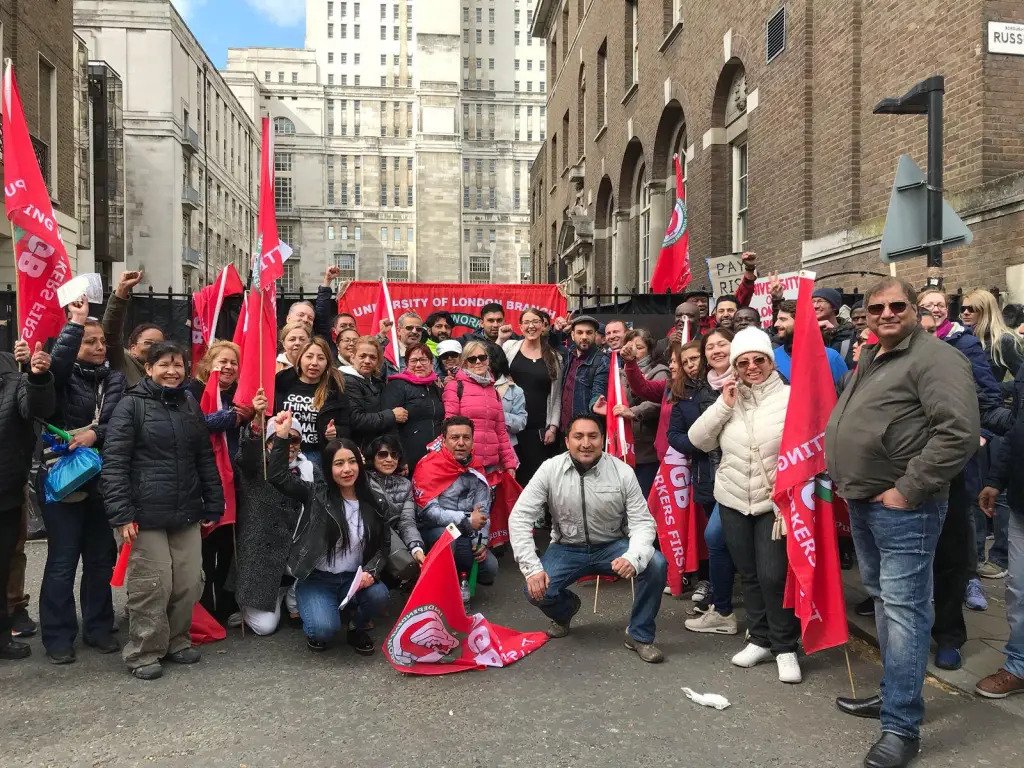
We are also expected to protect our communities from all forms of hate, including antisemitism and Islamophobia. But security officers have identities, beliefs and consciences too. I should be able to express solidarity with Palestinians and stand for their freedom without being branded antisemitic. Opposing antisemitism does not mean silencing Palestinians. Putting on a uniform should never mean leaving your humanity or your convictions at the door.
And our own safety can sometimes feel like an afterthought. Security guard Bernard Agyemang was seriously injured while responding to the synagogue attack in Manchester in October 2025. For those of us who work in security, danger is not an abstract idea. It is part of the reality of the job.
So when we ask for proper PPE, adequate staffing and safe procedures, we are not asking for special treatment. We are asking for the same care and protection that we are expected to provide to others.
Many of us came to this country carrying stories of hardship, determined to build better lives. We came to work, contribute and build a future. We did not come to be treated as disposable.
But there is strength in what we have built together. As a workplace representative, I see workers standing up for one another. I see students challenging the two-tier system. I see people refusing to accept that those doing essential work should have fewer rights simply because their employer is a contractor.
We are not asking for charity. We are asking for fairness. Equal pay. Equal benefits. Equal dignity.
Every morning, the alarm rings while it is still dark. I put on the uniform, put on the smile and step through the doors ready to protect others.
But behind the smile is a worker who deserves to be protected too.
Bring outsourced workers in-house.